 English
 Español
 Português
 русский
 Français
 日本語
 Deutsch
 tiếng Việt
 Italiano
 Nederlands
 ภาษาไทย
 Polski
 한국어
 Svenska
 magyar
 Malay
 বাংলা ভাষার
 Dansk
 Suomi
 हिन्दी
 Pilipino
 Türkçe
 Gaeilge
 العربية
 Indonesia
 Norsk
 تمل
 český
 ελληνικά
 український
 Javanese
 فارسی
 தமிழ்
 తెలుగు
 नेपाली
 Burmese
 български
 ລາວ
 Latine
 Қазақша
 Euskal
 Azərbaycan
 Slovenský jazyk
 Македонски
 Lietuvos
 Eesti Keel
 Română
 Slovenski
 मराठी
 Srpski језик

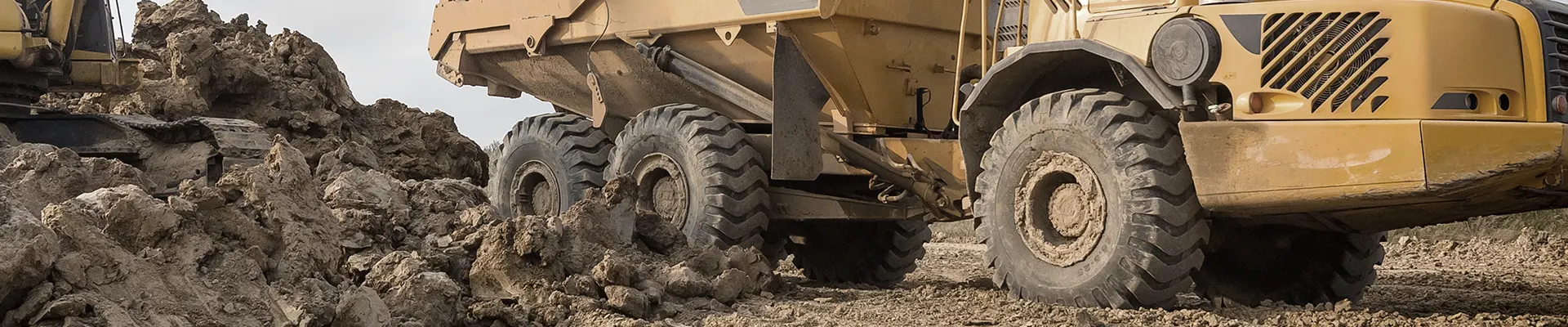
How Do Loader and Dozer Tires Improve Traction on Rough Terrain?
Loader and dozer tires play a critical role in maintaining traction, stability, and operating efficiency on rough terrain. From muddy construction sites to rocky mining roads, tread pattern, rubber compound, tread depth, and sidewall reinforcement all influence tire performance. In this article, we explain how these design features affect traction and explore how Linglong's radial OTR tire range, including L-3 and L-5 tread designs, addresses different working conditions. We also examine practical specifications and selection factors for heavy equipment applications.
Table of Contents
- 1. What Determines Tire Traction on Rough Terrain?
- 2. How Does Tread Pattern Improve Ground Grip?
- 3. How Do Tire Construction and Materials Affect Traction?
- 4. Linglong Loader and Dozer Tires for Different Working Conditions
- 5. How to Choose the Right Tires for Rough Terrain
- 6. How to Maintain Traction and Extend Tire Service Life
- 7. Frequently Asked Questions
1. What Determines Tire Traction on Rough Terrain?
When we evaluate loader and dozer tire performance, traction is one of the first factors we consider. Heavy equipment rarely operates on uniform ground. A wheel loader may move between loose soil, compacted gravel, wet earth, and concrete during the same shift. A dozer may work continuously on uneven ground containing sharp rocks, mud, and construction debris.
Under these conditions, tire traction depends on more than the rubber compound. The tread pattern must generate sufficient grip, the contact area must distribute the machine's weight, and the tire structure must withstand repeated impacts and deformation.
We generally evaluate four important factors:
- Tread pattern: Determines how effectively the tire grips the ground and maintains traction during acceleration, turning, and pushing.
- Tread depth: Influences the available biting edges and the tire's ability to maintain grip as the tread wears.
- Contact footprint: Affects ground pressure, stability, and mobility on loose or uneven surfaces.
- Sidewall and casing strength: Helps protect the tire against cuts, abrasion, and damage from rocks or construction debris.
In practical operation, these factors work together. A deep tread alone cannot guarantee good performance if the pattern becomes packed with mud. Likewise, an aggressive tread may provide strong grip but still suffer premature damage if the sidewall is not suitable for the working environment.
2. How Does Tread Pattern Improve Ground Grip?
Tread design is one of the most visible differences between heavy-duty OTR tires. The arrangement, depth, and angle of tread blocks determine how the tire interacts with the ground.
2.1 Open and Aggressive Tread Patterns for Loose Ground
On muddy or loose surfaces, tires need tread grooves that can release accumulated soil and maintain contact with firmer ground. An appropriate tread pattern helps prevent excessive mud buildup and supports consistent traction.
Linglong's LXA PREMIUM radial tire uses a self-cleaning tread pattern designed to improve traction. Its larger footprint and lower ground contact pressure also support stability and mobility on challenging surfaces. This type of design is worth considering for loaders working across soft ground and mixed construction-site conditions.
2.2 Wider Tread Blocks for Handling and Lateral Grip
Traction is not only about moving forward. Loaders frequently turn while carrying materials, reverse into loading positions, and operate on uneven ground. Lateral adhesion therefore matters just as much as straight-line grip.
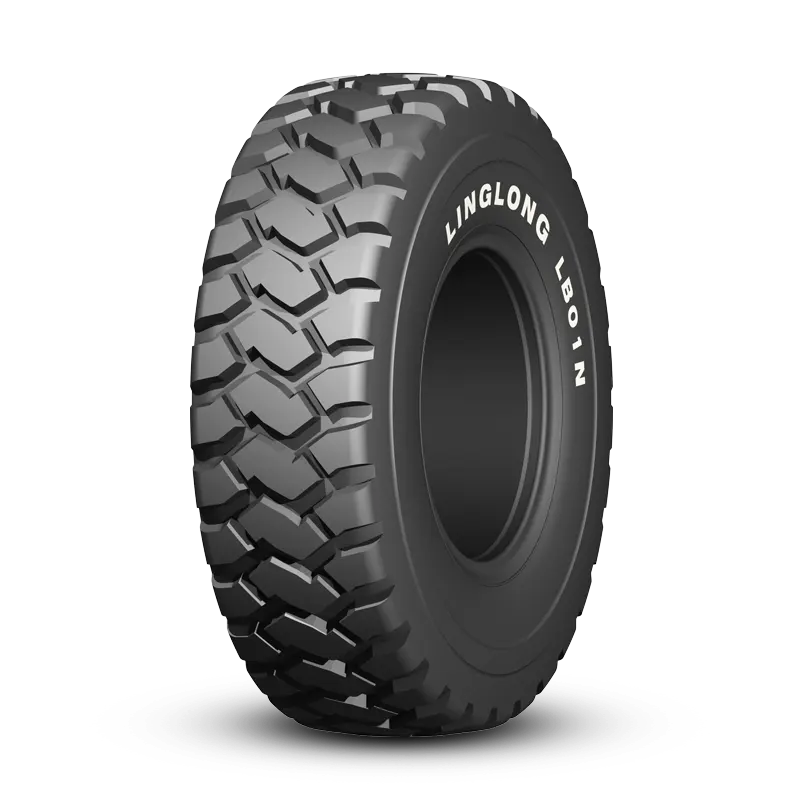
The LB01N E-3/L-3 radial tire features a wide, aggressive tread design to improve handling and lateral adhesion. Its optimized tread compound is designed for extended wear and endurance, while reinforced sidewalls help resist cuts and abrasion.
For equipment operating in gravel yards, construction areas, and mixed-terrain material handling environments, these features help address both traction and tire durability requirements.
2.3 Deep Treads for Severe Rock Conditions
Rocky working environments create a different set of challenges. Sharp stones can penetrate or damage the tread, while repeated contact with rough surfaces accelerates wear.
For these conditions, L-5 radial tires provide a deeper tread design than conventional L-3 patterns. Linglong's LB02SD, for example, uses an L-5 directional tread pattern for mud and soft conditions. Its deep tread is designed to provide longer wear life and its construction is intended for severe rock applications.
The LXL TRACTION L-5 radial tire takes another approach, combining an optimized tread pattern with a non-directional design. This provides strong traction while simplifying tire installation.
3. How Do Tire Construction and Materials Affect Traction?
Even an effective tread pattern cannot perform properly without a suitable tire structure. In heavy equipment applications, the casing, belt package, rubber compound, and sidewall all influence how the tire responds to changing ground conditions.
3.1 Steel Belt Construction and Puncture Resistance
Construction sites and mining areas often contain sharp stones, metal fragments, and other debris. These objects can damage the tread and lead to unexpected equipment downtime.
Linglong's LR400 radial tire features a steel-belted tread design intended to prevent tire punctures. It also uses a nylon casing to provide improved riding comfort and a special tread compound to enhance tread wear resistance.
For smaller loader applications, LR400 is available in two listed sizes:
| Specification | 405/70R18 | 405/70R20 |
|---|---|---|
| Load Index | 141/153 | 143/155 |
| Rim | 13.00 | 13.00 |
| Section Width | 407 mm | 407 mm |
| Overall Diameter | 1,025 mm | 1,076 mm |
| Tread Depth | 23 mm | 23 mm |
| Load Capacity | 2,575 kg | 2,725 kg |
| Inflation Pressure | 380 kPa | 380 kPa |
| Type | TL | TL |
These specifications help equipment operators compare tire dimensions and rated load information before selecting a replacement. Actual application suitability should always be checked against the machine manufacturer's requirements and the applicable tire load and pressure conditions.
3.2 Sidewall Reinforcement Against Cuts and Abrasion
Sidewall damage is a common concern when heavy machinery works close to rocks, debris, and uneven surfaces. During turning and maneuvering, the tire sidewall may also come into contact with obstacles.
Linglong incorporates reinforced sidewall structures into several OTR tire models. The LB01N features maximized sidewall reinforcement against cutting and abrasion, while the LXL MASTER combines a robust shoulder with an enhanced sidewall for improved resistance to damage.
These features are particularly relevant for equipment operating in quarries, mining areas, and demanding construction environments where tire damage can interrupt daily work.
3.3 Rubber Compounds and Wear Resistance
The rubber compound influences how quickly a tread wears under repeated contact with rough ground. A suitable compound helps balance traction and durability, particularly when equipment operates for long hours under heavy loads.
Linglong's LB06S L-3 radial tire uses a special styrene-butadiene rubber (SBR) tread compound designed to improve wear resistance and reduce heat generation. This is an important consideration for demanding operations where tire temperatures and continuous surface friction affect service life.
4. Linglong Loader and Dozer Tires for Different Working Conditions
We do not recommend choosing every heavy-duty tire based on one performance feature. The correct option depends on the ground surface, machine type, operating load, working hours, and expected tire life.
Linglong offers several radial OTR tire models with different tread designs and construction features. The following comparison highlights their main characteristics.
| Model | Tread Classification | Main Design Features | Relevant Applications |
|---|---|---|---|
| LR400 | Radial | Nylon casing, steel-belted tread, wear-resistant compound | Loader applications requiring puncture protection and riding comfort |
| LB01N | E-3/L-3 | Wide aggressive tread, reinforced sidewall, optimized compound | Mixed terrain and demanding material handling |
| LXL MASTER | E-3/L-3 | Optimized tread angle, larger center blocks, reinforced shoulder | Construction and general loader operations |
| LXA PREMIUM | L-3 | Self-cleaning tread, rugged shoulder, larger footprint | Soft ground and mixed-terrain operations |
| LB06S | L-3 | Self-cleaning pattern, SBR tread compound | Mines, quarries, rocky and gravel surfaces |
| LB02SD | L-5 | Directional tread, deep tread depth | Mud, soft ground, and severe rock applications |
| LXL TRACTION | L-5 | Optimized non-directional tread, reinforced shoulder | Heavy-duty applications requiring traction and sidewall protection |
| LXL PROTECT | L-5 | Deeper tread, cut-resistant pattern, rugged shoulder rib | Severe working conditions with increased cut and abrasion exposure |
4.1 L-3 Tires for General Loader Operations
L-3 tires are commonly considered for general loader applications involving material handling, construction work, and mixed ground conditions. Their tread design provides a balance between traction, handling, and wear resistance.
For example, the LXL MASTER uses an optimized tread angle to improve traction. Its larger center blocks are designed to promote more even wear, while the reinforced shoulder and sidewall provide additional protection.
Its listed 23.5R25 specification has a 33 mm tread depth and a load capacity of 14,500 kg at the specified inflation pressure of 650 kPa. This provides a useful reference when comparing tire configurations for compatible equipment.
4.2 L-5 Tires for More Demanding Ground Conditions
When equipment works regularly on rough rock surfaces or in severe mining conditions, a deeper tread may be more appropriate. L-5 tires are designed with greater tread depth to provide additional wear material and support demanding applications.
For example, the LB02SD is available in 20.5R25, 23.5R25, 26.5R25, and 29.5R25 sizes. Its listed tread depths range from 70 mm to 92 mm, depending on size.
The LXL TRACTION also uses an L-5 radial construction. Its optimized tread design focuses on traction, while its non-directional pattern makes installation simpler.
4.3 Comparing L-3 and L-5 Tires
| Comparison Factor | L-3 Radial Tires | L-5 Radial Tires |
|---|---|---|
| Primary Focus | General loader traction and handling | Severe service and deeper tread requirements |
| Tread Design | General-purpose tread patterns | Deep tread patterns for demanding surfaces |
| Typical Ground Conditions | Gravel, soil, and mixed construction surfaces | Severe rock and demanding off-road surfaces |
| Wear Considerations | Balanced wear and operating performance | More tread depth available for severe applications |
| Selection Priority | Handling, traction, and general service life | Cut resistance, tread depth, and severe-duty performance |
One important point: L-5 is not automatically the better choice for every machine. A deeper tread can be advantageous in severe rock conditions, but the actual selection should also consider rolling resistance, operating speed, heat generation, machine compatibility, and the working cycle.
5. How to Choose the Right Tires for Rough Terrain
When selecting Loader and Dozer Tires, we recommend starting with the actual operating environment rather than choosing the deepest or most aggressive tread available.
5.1 Identify the Main Ground Conditions
Different surfaces place different demands on tire construction:
- Muddy ground: Look for tread patterns with effective self-cleaning characteristics to reduce soil buildup.
- Loose gravel: Consider tread designs that provide sufficient traction and lateral stability.
- Rocky terrain: Prioritize suitable tread depth, cut resistance, and shoulder protection.
- Mixed construction sites: Look for a practical balance of traction, handling, and wear resistance.
- Snow and ice: Consider tire patterns and compounds specifically designed for cold-weather traction. Linglong's LSN201 E-2/L-2 radial tire features a special snow tread compound and a pattern optimized for grip on ice and snow.
5.2 Check Tire Dimensions and Load Capacity
Before ordering replacement tires, confirm the required tire size, rim width, load index, load capacity, and inflation pressure. A tire that physically fits the wheel may still be unsuitable for the machine's actual operating load.
For example, Linglong's 29.5R25 LB02SD has a listed section width of 749 mm, an overall diameter of 1,921 mm, a tread depth of 92 mm, and a load capacity of 22,400 kg at 650 kPa. These figures should be compared with the equipment manufacturer's specifications and the actual operating conditions.
5.3 Consider Operating Hours and Maintenance Costs
For equipment operating multiple shifts, tire service life has a direct influence on maintenance planning and operating costs. A tire with a suitable tread compound and reinforced structure may help reduce premature wear and damage-related downtime.
We suggest comparing not only the initial tire price but also the expected operating hours, replacement frequency, downtime, and maintenance requirements. A suitable tire should perform consistently under the conditions for which it was selected.
6. How to Maintain Traction and Extend Tire Service Life
Even well-designed heavy-duty tires can lose performance when operating conditions and maintenance practices are not properly controlled. Based on the technical characteristics of Linglong's OTR tire range, we recommend paying attention to the following points.
- Check inflation pressure regularly: Maintain pressure according to the tire specifications, machine manufacturer's recommendations, and actual load conditions.
- Inspect tread wear: Monitor uneven wear, cuts, embedded stones, and abnormal tread damage.
- Check sidewalls: Look for cuts, cracks, abrasions, and impact damage, particularly after working in rocky areas.
- Avoid excessive overloading: Operating beyond the rated load can increase heat buildup and structural stress.
- Adjust operating practices: Avoid unnecessary sharp turns, excessive wheel spin, and aggressive acceleration on loose or rocky surfaces.
- Remove trapped debris: Inspect tread grooves and remove stones or other materials when safe to do so.
Regular inspections help identify early signs of damage before they develop into more serious problems. For fleets with multiple loaders and dozers, keeping basic records of tire pressure, tread condition, operating hours, and replacement dates also makes maintenance planning more effective.
7. Frequently Asked Questions
Q1: What type of tires provides better traction on rough terrain?
The right tire depends on the surface. L-3 radial tires are commonly suitable for general loader operations on mixed terrain, while L-5 tires are designed for more demanding conditions requiring deeper tread. Tread pattern, rubber compound, and sidewall construction should all be considered.
Q2: What is the difference between L-3 and L-5 loader tires?
The main difference is their tread design and intended application. L-3 tires are designed for general loader service, while L-5 tires feature deeper tread patterns for severe-duty applications, particularly on rough and rocky surfaces. The choice should depend on the machine and actual working conditions.
Q3: How does a self-cleaning tread pattern improve tire traction?
A self-cleaning tread pattern helps release accumulated mud and soil from the grooves. This allows the tread blocks to maintain better contact with the ground, supporting traction and mobility on soft or muddy surfaces. Linglong's LXA PREMIUM is one example of a radial tire featuring this design.
Q4: Why is sidewall reinforcement important for loader and dozer tires?
Sidewalls are exposed to cuts, abrasion, and impacts when heavy equipment operates around rocks and construction debris. Reinforced sidewall structures help improve resistance to this type of damage and support tire durability in demanding working environments.
Q5: Which Linglong tire models are suitable for rocky working conditions?
Linglong offers several models with features relevant to rocky applications. The LB06S is designed for traction on rocky, gravel, and packed-earth surfaces. The LB02SD and LXL TRACTION use L-5 tread designs for severe rock applications, while the LXL PROTECT focuses on deeper tread, cut resistance, and sidewall protection.
Q6: How does tire inflation pressure affect traction?
Inflation pressure influences tire deformation, contact footprint, load capacity, and heat generation. Incorrect pressure can affect handling, wear, and tire durability. Always follow the specified pressure for the tire size, load, and operating conditions rather than making adjustments without reference to manufacturer recommendations.
Q7: How can I extend the service life of loader and dozer tires?
Regular pressure checks, proper load management, routine tread and sidewall inspections, and avoiding excessive wheel spin can help extend tire service life. Selecting the correct tread pattern for the working surface is equally important.
Conclusion
Traction on rough terrain is the result of several tire design factors working together. Tread pattern determines how effectively the tire grips different surfaces, tread depth influences wear potential and severe-duty capability, while reinforced sidewalls and suitable rubber compounds help protect against damage during demanding operations.
At Linglong, we offer a range of Loader and Dozer Tires with different radial constructions and tread designs for construction, mining, quarrying, and material handling applications. From the L-3 LXA PREMIUM with its self-cleaning tread to the deep-tread LB02SD L-5, each model addresses different operating requirements.
Founded in 1975, Shandong Linglong Tyre Co., Ltd. integrates tire manufacturing, product development, and technical research. With manufacturing bases in China, Thailand, and Serbia, along with R&D centers in China and North America, Linglong serves customers in 173 countries.
For more information about our OTR tire product range and available specifications, visit Linglong's official product pages. Choosing tires according to actual terrain, machine requirements, and operating loads is the starting point for achieving reliable traction and more predictable equipment performance.
Send Inquiry




X
We use cookies to offer you a better browsing experience, analyze site traffic and personalize content. By using this site, you agree to our use of cookies.
Privacy Policy